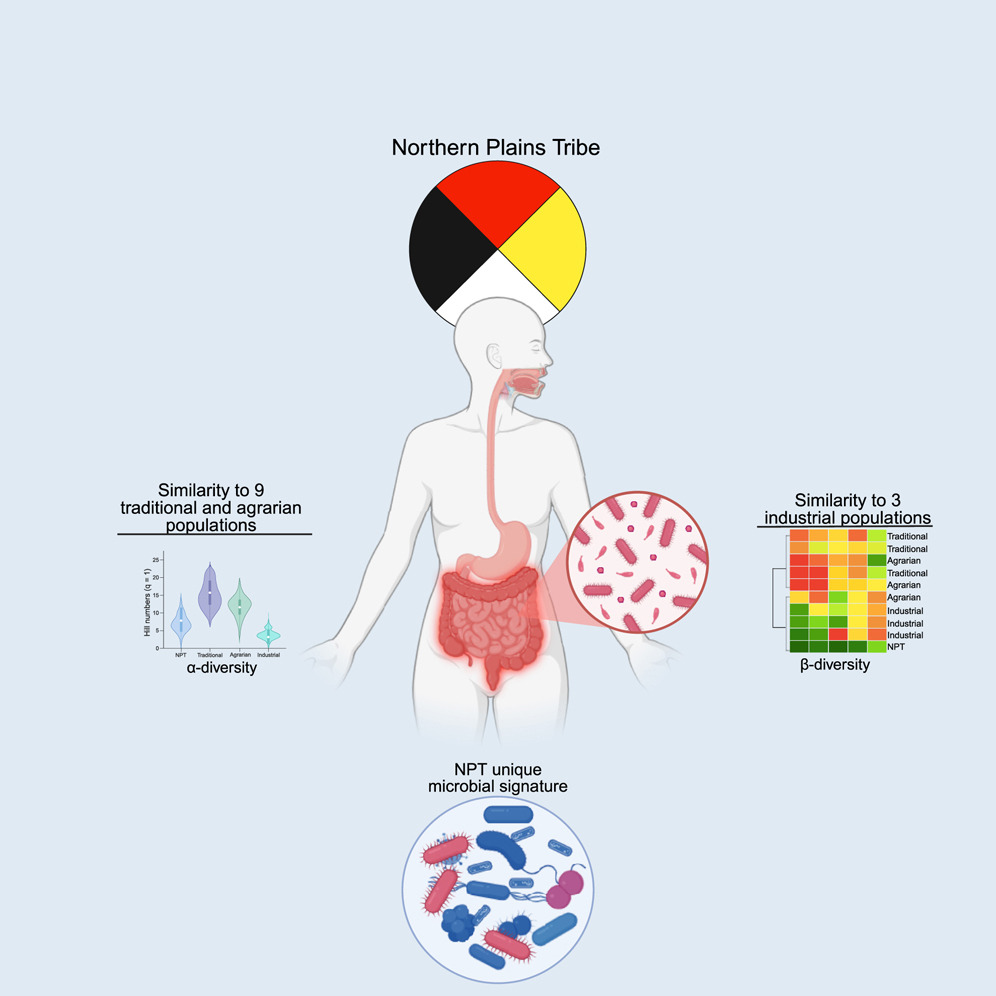
The human gut is shaped by environmental factors, producing distinct microbial communities. Indigenous individuals practicing traditional lifestyles often harbor more diverse microbiota, with taxa often absent in industrialized people. However, little engagement has occurred with American Indian communities in North America who experienced forced relocation and dietary programs during colonization. Here, shotgun metagenomics profiled the gut microbiome of people from a Northern Plains tribe (NPT) reservation in comparison to 12 global populations engaged in traditional, agrarian, or industrialized lifestyles. Analysis of the 532 samples revealed that the NPT microbiota exhibited greater bacterial and archaeal diversity than industrialized populations but reduced diversity compared to global traditional and agrarian populations. Relative to the general United States population, NPT microbiomes encoded more virulence factor and microbial defense genes and fewer CAZyme-encoding genes. These findings suggest that the NPT gut microbiome is in transition between lifestyles associated with global Indigenous and industrialized populations.